
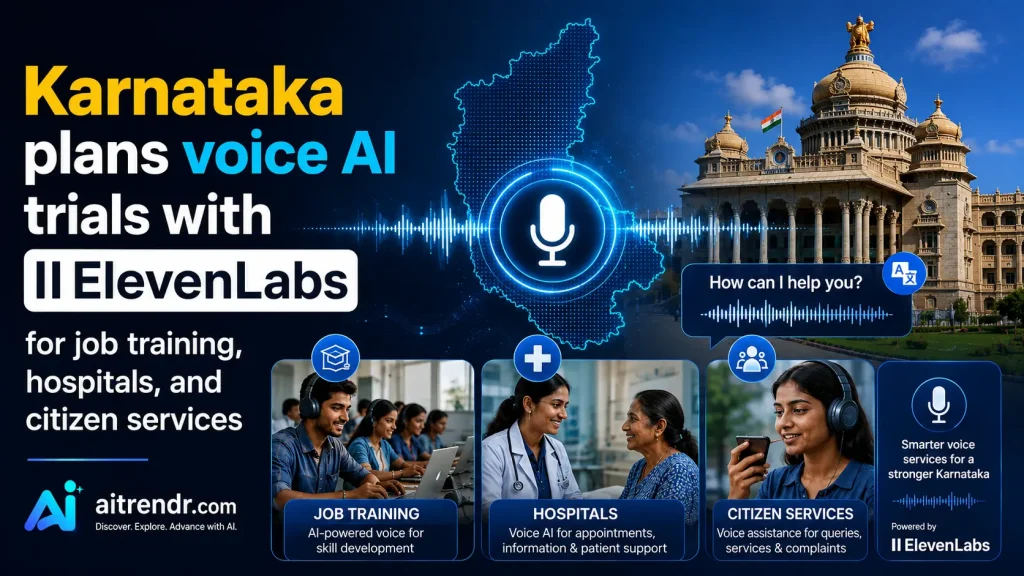
On August 27, Karnataka’s IT and BT Minister Priyank M Kharge met with ElevenLabs representatives—Ben Supple, Nihal Chauhan, and Arielle Andrews—to talk about voice AI. The state wants to run small tests across several areas: job training, public services, hospitals, attracting investment, culture, and citizen help desks.
The ElevenLabs group showed off a tool that practices interview questions with users. They also walked through their methods for spotting fake audio, tracking where clips come from, and adding invisible watermarks.
One worry came up more than once: bad actors could use synthesized voices to impersonate officials or spread false information about government programs. The Minister asked for a step-by-step plan and told both sides to focus on a first pilot that would show real benefits for ordinary people.
“I want Karnataka to lead in turning AI breakthroughs into improvements that citizens can feel,” Kharge said. “We talk to companies building the strongest tech, figure out where it fixes actual headaches, and then move to pilots we can grow statewide. That could mean helping someone practice for a job, giving investors faster answers, upgrading public services, or bringing AI into medicine. What matters is building delivery models that work, waste nothing, reach everyone, and carry responsibility.”
This meeting fits a wider push by the state government to team up with tech firms and turn AI advances into working public-service tools—especially where automation might cut through red tape or boost employment.
Earlier in August, Karnataka had similar conversations with Anthropic and Sarvam AI. Those talks touched on letting AI assistants handle quick e-FIR filings and zero FIRs during emergencies, all while keeping citizen data inside the country.
ElevenLabs also asked the Minister to speak at their India Summit in Bengaluru this October. Company leaders plan to talk about where voice AI stands right now and what it could do in the Indian context.